
The Role of Formal Shirts in Modern Corporate Dressing
Dress codes have relaxed, yet the formal shirt remains central to corporate dressing. Here is how its role has changed.
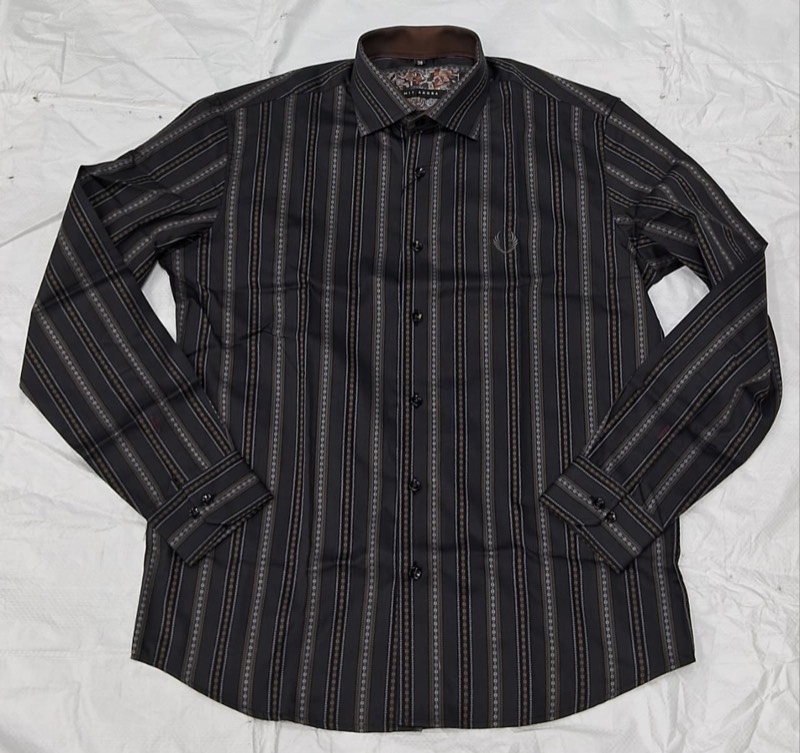
Corporate dress has loosened considerably over the past few decades. Ties have retreated, jackets come off at the desk, and many offices now describe their dress code in a sentence rather than a rulebook. Yet the formal shirt has not disappeared from working life; if anything, it has become the piece that carries most of the responsibility. Understanding why it has survived, and how its role has changed, helps you use it well.
From uniform to anchor
For much of the twentieth century, the office outfit was close to a uniform: a suit, a white or pale shirt, a tie and polished shoes. The shirt was important but partly hidden, framed by lapels and a knot. When business casual took hold in offices during the 1990s, the jacket and tie were the first things to go, and the shirt was suddenly on full display.
That shift changed the shirt's job. It no longer simply needed to be clean and white; it had to look complete on its own. Collar shape, fit through the body and quality of fabric all became more visible. In many workplaces today, the shirt is the anchor of the outfit, the single item that tells colleagues and clients you take the day seriously, even when the rest of the look is relaxed.
Reading your workplace
There is no single corporate dress code any more, and part of dressing well is recognising where your own office sits. Broadly, most workplaces fall somewhere along this range.
Traditional professional. Banking, law, some government and senior client-facing roles. Suits or at least jackets are expected for meetings, and business shirts in white, light blue and restrained stripes are the norm. A tie may still be required on certain days.
Business professional without the suit. Many corporate headquarters, consultancies and large Indian firms. A formal shirt with tailored trousers is the daily standard, ties appear for important meetings, and a blazer is kept on hand.
Business casual. Much of the private sector. A collared shirt is expected, but colours and patterns widen, sleeves may be rolled, and chinos are often acceptable.
Smart casual. Technology companies, start-ups and creative agencies. Formal shirts are not required, but a well-fitting one instantly lifts a person above the room's default, which is exactly why many people in these settings choose to wear them for client calls or reviews.
The difference between the middle two categories is explored more fully in the article on formal and business-casual dressing. The practical point here is that the formal shirt is useful across all four: required in the first two, an asset in the last two.
What a shirt communicates now
Because fewer people dress formally by default, a good shirt has more signalling power than it once did. In a room of polo shirts, a crisp collar suggests preparation. In a room of suits, a well-fitted shirt suggests attention to detail. Three qualities do most of the communicating.
- A collar that holds its shape. Without a tie, the collar frames the face on its own. A collar that collapses or curls looks tired, while one with a sound interlining stays neat through the day.
- Fit through the body. Without a jacket to disguise it, excess fabric at the waist and back is obvious. Slim-fit and regular-fit formal shirts both have their place; what matters is that the shirt follows your shape without pulling.
- Clean, quiet colour. White and blue formal shirts remain the safest choices for men's office wear because they look composed in any setting and photograph well.
The shirt fit guide covers the specifics of shoulders, chest and sleeves if you want to check your current shirts against those standards.
The shirt without a tie
The open collar is now the most common way men wear formal shirts at work, and it has its own small set of conventions.
- Undo one button, sometimes two. One open button looks tidy; two is relaxed but acceptable in most offices. Beyond that it starts to look like evening wear.
- Choose a collar that stands up. Semi-spread and button-down collars tend to sit better open than very wide spreads, which can flatten and splay without a tie. The shirt style directory shows how each collar type behaves.
- Keep the undershirt hidden. If you wear a vest underneath, a V-neck in a colour close to your skin tone disappears better than a white round-neck.
- Remove collar stays only if the collar is designed for it. Many collars look neater open with stays left in.
Hybrid work and the camera
A large share of meetings now happen on screen, and that changes which shirt details matter. On a video call, colleagues see only your head, collar and upper chest, often lit by a laptop screen or a window behind you.
Very fine stripes and small checks can shimmer on camera, creating a distracting moiré effect. Bright pure white can glow under strong light and make the face look darker by comparison. Soft blues, muted pinks and off-whites tend to look most natural on screen. The collar matters more than ever, since it sits right in the frame; a collar that lies flat and symmetrical looks far more composed than one that has been crushed by a headset.
Many people working from home keep one or two reliable shirts close to the desk for calls. There is nothing wrong with that, provided the shirt is pressed and genuinely fits rather than being the one that has been draped over a chair for a week.
Beyond the desk: climate and celebrations
Commuting and air-conditioning
In Mumbai, corporate dressing has to survive more than the office. A commute in humid heat, a monsoon downpour or a crowded train can all leave a shirt creased and damp before the working day begins, and then several hours in a cold, air-conditioned office follow.
A few habits help. Breathable cotton weaves such as poplin and fine twill handle humidity better than heavier fabrics, and lighter colours show perspiration less than mid-tones such as grey. Easy-care cotton blends, which became widespread in the mid-twentieth century, are worth considering for long travel days, though pure cotton generally feels cooler. Some professionals keep a spare shirt at work for afternoon meetings. More on weaves and their behaviour can be found in the guide to fabrics and craftsmanship.
Festive gatherings
Modern corporate life also includes a busy social calendar: Diwali celebrations, annual days, team dinners and colleagues' weddings. Here the formal shirt often bridges office wear and occasion wear. A richer colour, such as deep blue, burgundy or a textured white, worn with dark trousers and good shoes, moves an outfit from the desk to the dinner without needing a full change. Where traditional dress is expected, of course, the shirt steps aside, but for many office events a smart shirt remains the default.
Choosing well for the long term
The formal shirt's role in corporate dressing is no longer about following a rule. It is about giving yourself a dependable foundation that you can dress up or down in a minute. Build around a few white and blue business shirts that fit properly, add stripes and soft colours once the basics are covered, and pay attention to collars above all. The article on building a versatile business wardrobe goes further into quantities and rotation. When you are ready to compare fits and fabrics properly, trying shirts on in person is invaluable, and you can explore formal shirts in Mumbai at Options Mall in Vile Parle West.
The Modern Gentleman's Journal · Options Mall, Vile Parle West, Mumbai